
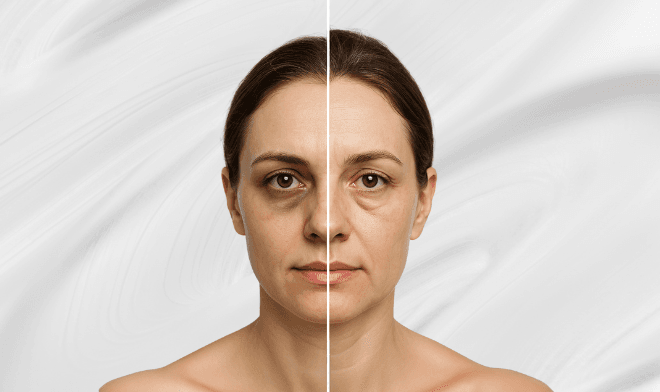
The skin around the eyes is exceptionally delicate, making it one of the first areas to reveal changes caused by genetics, aging, lifestyle, and environmental exposure. Two concerns are particularly common: eye bags and dark circles. Although they often appear together, they are not the same condition. Understanding the distinction can make it easier to choose an appropriate approach and avoid using treatments that target the wrong underlying issue.
What Are Eye Bags?
Eye bags refer primarily to puffiness or a noticeable bulge beneath the lower eyelids. They can become more apparent in the morning, after insufficient sleep, or following a period of fluid retention. However, persistent eye bags may also develop as part of the natural aging process.
As the skin loses elasticity, the structures supporting the lower eyelid gradually change. Fat that normally sits around the eye can shift forward, creating a more pronounced pouch-like appearance. Genetics can also play a substantial role, which explains why some people develop prominent eye bags relatively early in life.
Temporary puffiness is somewhat different. Salty meals, allergies, crying, dehydration, and disrupted sleep can contribute to short-term swelling without indicating permanent structural changes.
What Are Dark Circles?
Dark circles describe a darker appearance beneath or around the eyes rather than a physical bulge. Their coloration can vary considerably. Some people experience brownish pigmentation, while others notice bluish, purple, or grayish tones caused by visible blood vessels beneath thin skin.
Several mechanisms can contribute to under-eye darkness. Hyperpigmentation may become more noticeable after sun exposure or inflammation. Thin skin can make underlying vessels more visible, while tear-trough hollows may produce shadows that resemble discoloration.
This complexity is important because dark circles are not a single condition with one universal solution. Effective Dark eye circle treatment depends on identifying what is actually creating the darker appearance.
Eye Bags and Dark Circles Can Occur Together
It is entirely possible to have both concerns simultaneously. A person may have mild lower-eyelid puffiness combined with pigmentation, vascular visibility, or hollowness beneath the eyes.
The distinction becomes especially useful when selecting skincare or professional procedures. A brightening serum may help pigmentation but will not remove a structural fat pad. Likewise, reducing puffiness will not necessarily correct brown pigmentation.
Common Causes of Eye Bags
Age-related changes are among the most recognizable causes of persistent eye bags. Collagen and elastin gradually decline, while supporting tissues become less resilient. Genetics can influence the timing and prominence of these changes.
Temporary factors can also exaggerate puffiness. Poor sleep, allergies, prolonged crying, dehydration, and dietary sodium may contribute to fluid accumulation around the eyes.
A consistent sleep schedule, adequate hydration, and management of known allergies can therefore be useful when puffiness is intermittent rather than structural.
Common Causes of Dark Circles
Dark circles can originate from several different pathways. Genetics may influence skin thickness and pigmentation tendencies, while repeated rubbing caused by allergies can aggravate discoloration.
Sun exposure is another important consideration. Ultraviolet radiation can stimulate melanin production, potentially making pigmentation more conspicuous. In other cases, the appearance is largely vascular or structural rather than pigmentary.
Hollowing beneath the eyes can cast a shadow across the lower eyelid, producing a darker appearance even when the skin itself is not significantly pigmented.
Skincare Approaches for Dark Circles
A simple skincare routine can be useful when pigmentation or environmental factors contribute to under-eye darkness. Broad-spectrum sunscreen is particularly important because ultraviolet exposure can worsen pigmentation.
Ingredients such as vitamin C, niacinamide, retinoids, and selected brightening compounds are sometimes incorporated into eye-area routines. Because the skin around the eyes is sensitive, formulations should be introduced cautiously and according to product instructions.
Cold compresses may temporarily reduce puffiness, while adequate sleep can help minimize the tired appearance associated with transient swelling.
When Professional Treatment May Help
Persistent pigmentation that does not respond sufficiently to skincare may be evaluated by a qualified dermatologist. Depending on the underlying cause, professional options can include chemical peels, certain laser procedures, or other dermatological treatments.
Laser-based approaches are sometimes considered when pigmentation is a significant component. pico laser treatment uses very short laser pulses and may be used for selected pigmentation concerns, although suitability depends on skin type, pigmentation characteristics, and professional assessment.
It is important to remember that a treatment designed for pigmentation cannot necessarily correct prominent fat pads or pronounced tear-trough hollows.
Treating Structural Eye Bags
When eye bags are primarily caused by anatomical changes, topical skincare generally has limited ability to alter the underlying structure. Medical assessment can help determine whether the appearance is related to fat protrusion, skin laxity, fluid retention, or a combination of factors.
For more pronounced structural changes, a dermatologist or qualified medical professional may discuss procedures appropriate to the individual anatomy. The objective is not simply to make the area look brighter but to address the mechanism producing the contour change.
Lifestyle Habits That Support the Eye Area
Healthy everyday habits can make the eye area appear more refreshed, even though they cannot completely alter genetic or structural characteristics. Regular sleep, adequate fluid intake, sun protection, balanced nutrition, and avoiding unnecessary rubbing around the eyes can all be beneficial.
Managing allergies may also reduce habitual eye rubbing and associated irritation. These small measures are often more sustainable than relying exclusively on intensive cosmetic procedures.
Choosing the Right Approach
The most useful first step is determining whether the concern is primarily puffiness, pigmentation, visible vessels, structural shadowing, or a combination of several factors. A mirror can provide clues, but persistent or pronounced changes are better assessed by a qualified healthcare professional.
Eye bags are predominantly a contour and volume concern, whereas dark circles are generally related to pigmentation, vascular visibility, shadows, or a mixture of these mechanisms. Treating them as interchangeable can lead to disappointing results.
Understanding the distinction allows treatment to become more precise. Instead of searching for one universal remedy, the focus can remain on identifying the underlying cause and selecting an approach suited to the specific appearance of the under-eye area.


More Stories
The Power of Positive Headlines: Healthy News to Brighten Your Day
Breakthroughs and Buzz: The Latest Health News Shaking Up Wellness in 2024
Breakthrough Health Alerts: What’s New in Wellness Today